Monday, July 18, 2011

IMHO, Christ is the Truth

Spirituality Column #245
July 19, 2011
Current in Carmel - Westfield - Noblesville – Fishers
(Indianapolis north suburban home newspapers)

IMHO, Christ is the Truth
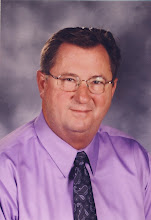
By Bob Walters

A talented writer friend who occasionally reads this article said to me recently, “You must get tons of scathing criticism. That topic (religion) is so totally an opinion.”

And it immediately struck me and I said out loud, reflexively but gently and kindly (I think), “Yeah, you’d think that might be the case, but I get very little negative criticism. And what’s even crazier is that I’ve never thought of it as an opinion column. I think of it, and write it, as a truth column.”

The truth of Jesus Christ is the core of the Christian faith. And – when I allow the Father, Son, Spirit Godhead it’s proper place in my life – Christ’s truth answers my questions large and small about life, purpose, reason, hope, love, family, the future, relationships, grace, conflict … everything.

The hard part for me (this is the truth) is the “when I allow” part, because I lack the natural patience, humility and surrender to look at every circumstance and think, “Just let the Lord handle that.” No, I want to get in there and fix things, argue points, make a difference and control my little corner of the Kingdom.

I think most believing, serious, praying Christians would agree that’s not a great way to go about one’s walk with the Lord, but (this is an opinion) many can relate to the shortcomings and fears we all experience dwelling in a fallen world.

Religious opinions and doctrines over the years have split Christian believers time after time, despite the truth that Jesus is the Christ, the son of the living God, Who we must trust as our Lord and Savior. Amen. That brief creed is fairly universal, but for Roman Catholic, Eastern Orthodox, Protestant, Baptist, Evangelical and other strains of Christianity, the person of Jesus Christ may be the only thing they agree on.

We fight viciously over our religious opinions which, I know from experience, too often supersede our trust in the thing we know is truth, Jesus Christ.

Christ’s truth is the lone and absolute antidote to these human shortcomings and fears and, in this sin-riven fallen world, provides grace, hope and the ultimate repair. That’s the truth, the capital-T Truth, and immune to man’s opinion.

My question is, why does man try to make himself immune to God’s truth?

IMHO (In My Humble Opinion), Christ is no opinion. And that’s the truth.

Walters (rlwcom@aol.com) suffers from extreme opinionation (a word he just made up and loves), but revels in God’s truth.

Labels: , , , ,

Monday, May 16, 2011

The Upside of Great Despair

Spirituality Column #236
May 17, 2011
Current in Carmel - Westfield - Noblesville – Fishers
(Indianapolis north suburban home newspapers)

The Upside of Great Despair
By Bob Walters

It’s a darn shame but a fact of life that often we have to bottom out before we can be lifted up by Christ.

Non-believers find the logic of that truth impossible to understand. That’s partly right – it is impossible – because at its core Christ’s truth is about faith, not logic.

We generally, rationally, think we have the best shot at saving ourselves from whatever malady might befall our human existence. “My brain and my logic are all I need,” we reason. “If I’m strong enough, I can fix this.” “I believe in me.”

Religion, many people think, is a cop out. I have had real conversations with smart people – some of them dear friends – whose view of someone “finding Jesus” was accompanied by a long, low whistle and a dipping motion of the hand.

“People turn to Jesus when it’s as bad as it can get …”; then comes the long low whistle and hand dip, implying, “They’re a mess. It’s so bad, they found Jesus!” The perceived awfulness isn’t so much a concern for the despair, suffering or hardship a person faces – that would take Godly compassion – the awfulness is turning to Jesus.

Oh no! Not Jesus! You’re a goner!

Our pride and egos are horrid things, and the power of Jesus Christ is opposite everything the world thinks it knows about power. In the world, power is the imposition of will. It’s living one more day. In Christ, power is love and freedom, and eternal life at the throne of God.

“Our egos are prisons that keep us from the love and freedom of Christ,” notes my teacher George. What a great statement. Our egos want power because we think with power, we can forestall death; maybe just for today or tomorrow – and we admit we’re all going to die someday – but power is about my strength.

We cannot tap into God’s inexhaustible supply of strength when we try to compete against it with our own. Christ is like an experienced lifeguard, George analogizes. He knows when to approach a drowning person. After letting us fight and tire awhile in the deep, swirling water of our sin and pride, when we realize we can swim no more, Christ comes and gets us.

The power of God is to forgive and to love, and His ultimate strength is His compassion. That’s the gift He gave us all in Jesus Christ.

Walters (www.believerbob.blogspot.com, email rlwcom@aol.com) found Christ when things were going fairly well; God somehow overwrote his sizable ego.

Labels: , , , , , , , , ,

Monday, February 28, 2011

Remembering to Forget about Me

Spirituality Column #225
March 1, 2011
Current in Carmel - Westfield - Noblesville – Fishers
(Indianapolis north suburban home newspapers)

Remembering to Forget about Me
By Bob Walters

How often we sit in church during a worship service – I know I have – imploring God for a way out of, through or around life’s cataclysms.

God’s glad we’re there talking to Him, and we’re glad He’s there to talk to. God’s available anywhere, yet sitting in church is where most of us feel closest to God’s ear.

But worship isn’t supposed to be about us or our present situation, good or bad. Worship is about God the Father, Christ the Son, and the Holy Spirit, not about “me.” We lose the best part of worship if we focus on our problems and desires rather than immersing ourselves in the true, powerful heart of worship, the heart of Jesus Christ.

The Christian life is about loving God and loving others. Jesus Christ is our example of what a Godly human life looks like. His love, peace, mercy, forgiveness, service, grace and more are outwardly directed manifestations of a life dedicated to God and humanity. For us those virtues can become vices if they are instead directed inwardly, selfishly … truly impeding our ability to worship God.

We don’t put a lamp “under a bowl,” says Matthew 5:15 (also Mark 4:21 and Luke 11:33). A “lamp on its stand” – Christ’s light in a Christian believer’s life – “gives light to everyone in the house.”

Christ’s life, death and resurrection are His light shining on us and bringing mankind back into communion with the Creator God. Our worship should reflect that light, remembering Christ’s unparalleled Kingdom gifts of defeating death, erasing sin, and restoring us to heavenly relationship. That’s bigger than anything I’d be praying for.

The bread and the cup of communion represent the closeness and reality of our covenant relationship with God through Christ, and with the community of believers with whom we share it. It’s a meal of love, a meal of remembrance, a meal in the here and now that attaches us to the eternity of God’s love, and to the eternal gift of Christ’s obedience, sacrifice and fellowship.

The fastest way to richer worship is spending more time outside of church praying. St. Paul tells us to “pray without ceasing” (1 Thessalonians 5:17). Amen. We should praise, pray, ask, thank, confess and witness in all that we do, all the time.

And when it’s time to worship, forget yourself and free yourself.

It’s all about Thee, not me.

Walters (rlwcom@aol.com) notes that if one’s approach to worship is “What’s in it for me?”, by all means, go and find out.

Labels: , , , , ,

Monday, November 29, 2010

Finding Christ in Christmas, Part 1

Spirituality Column #212
November 30, 2010
Current in Carmel - Current in Westfield - Current in Noblesville
(Indianapolis north suburban home newspapers)

Finding Christ in Christmas, Part 1
By Bob Walters

There’s an old theology joke about God playing hide and seek with man.

Everywhere God hid – mountains, oceans, stars, streams, books, paintings, culture, music and magistrates – man found Him. God succeeded only when an angel suggested, “Hide in the human heart; man will never look for You there.”

Then there is Dorothy, who needed only to search her heart and click together the heels of the shoes she was already wearing to find her way home.

And there is the wandering drunk who stumbled upon a riverside revival. He was grabbed and dunked. The third time the unwitting sot was pulled up out of the baptismal waters, the thundering preacher once again demanded, “Have you found Jesus?” The soaked and stammering man gasped, coughed and sputtered, “I-I-I didn’t know I was supposed to be looking for him!”

So, three quick lessons. 1. God is always right here. 2. Home is where our heart is. And 3, the most underrated belief is to simply believe we’re supposed to look for Jesus.

Christmas is a great time to look for Jesus – the person of Christ, the Son of God, the unique and holy Word of God, the salvation of mankind ... the voice crying in the wilderness.

Jesus is especially easy to see this time of year. What does one think all the lights are for?

Notice loving people doing loving things for other people – buying gifts, preparing meals, decorating their homes, being hospitable. That’s the servant heart of the Lord Christ in action.

Yet we also notice the immense efforts of those trying to hide God, cloak Christ and make Christmas about worldly desires. That’s the wicked heart of Satan, the lord of the earth who exalts man over a God who Satan prefers people don’t seek.

At His earthly arrival, Christ wasn’t the powerful conquering warrior for whom the Jewish Nation awaited and prayed. Jesus was a helpless, humble baby born away in a manger to the frightened teenager Mary whose immaculate heart led her to obey God regardless of legitimate earthly peril.

And so Jesus came gently, I like to think, into that still, silent, good night.

Satan vigorously seeks to remove all that gentility, love, servant, humility, salvation stuff from the Christmas story, but commerce and greed are no match for the glory of God in Christ.

So be strong. Seek Jesus, search your heart, and find Christmas.

Walters (www.believerbob.blogspot.com, email rlwcom@aol.com) notes that a great place to start one’s search for Christ is by reading Isaiah 40. More next week.

Labels: , , , , ,

Monday, August 23, 2010

Strong Enough to be Weak

Spirituality Column #198
August 24, 2010
Current in Carmel - Current in Westfield - Current in Noblesville
(Indianapolis north suburban home newspapers)

Strong Enough to be Weak
By Bob Walters

There is a weekly CBS TV drama called “The Good Wife” where a female lawyer more or less “stands by her man.”

The adulterous husband is a formerly high-powered public official convicted in a complex political scandal. He lives in 24-7 ankle-bracelet home detention at their trendy downtown apartment.

It’s mainly a lawyer and law-firm show, but the disgraced husband – philandering, yes, but is he wrongly convicted? – provides an interesting layer of moral dilemma.

I tend to watch cable news, history and movies, not “TV shows.” My wife … a good wife … DVRs programs to “watch” while she is sewing or scrapbooking since we rarely have the time or the inclination to watch weeknight TV dramas.

My attention was grabbed by a DVR’ed rerun of “The Good Wife” when it introduced a Christian spin in the “bad husband’s” rehabilitation.

In a nutshell, the bad husband, Peter, has a loyal private investigator / public image consultant named Eli Gold who advises him to start going to church as a public relations tactic.

Gold picks out a nearby urban evangelical church pastored by a very devout and savvy black preacher who tells Peter – who is white and grew up Episcopalian – to get out of his church. He felt Gold and Peter were using him and mocking Christ, which of course, they were.

But Peter is struck by the preacher’s sincerity and directness, tells Gold to leave, and Peter accepts Christ. Peter wants to change, confesses his sin, wades into Bible study and prayer, and the preacher begins mentoring Peter in twice-weekly home visits.

Neither “The Good Wife” nor Gold can understand Peter’s conversion, much less take it seriously. There is much eye-rolling, sarcasm, and skepticism. Peter’s mother, a formidable, smart, matriarchal, old-money type, insists Peter see the family’s long-time Episcopal priest to “put his (Peter’s) religion in perspective.”

Her final decree against Peter’s deepening faith in Christ, belief in salvation, understanding of his sin and desire for change is – irony of scriptural ironies – “I will not allow my son to be made weak.”

Weak? In Christ?

I don’t know a single Christian who believes Christ makes them weak. Christ is about humility and strength; He is man and God. But we all know, sadly, that much of the world seeks power anywhere but in Christ.

The TV show got that right.

Walters (www.believerbob.blogspot.com, email rlwcom@aol.com) hasn’t regularly watched a network TV show since “The West Wing.”

Labels: , , , , , ,

Tuesday, August 3, 2010

Storming the Intellectual Ramparts, Part 3

Spirituality Column #195
August 3, 2010
Current in Carmel - Current in Westfield - Current in Noblesville
(Indianapolis north suburban home newspapers)

Storming the Intellectual Ramparts, Part 3
By Bob Walters

American Christian historian Mark Noll wrote about the limitations of Evangelical intellectual development in "The Scandal of the Evangelical Mind."

But I hope no one thinks he’s saying Christians, or Evangelicals, are stupid.

He’s saying that since God created everything and gave us freedom, every Christian ought to have the courage to study everything.

Right on. Noll’s thoughts are critical to reclaiming intellectual life for Christ.

Noll writes from the refreshing, academic viewpoint of the reality of God. The absence of that reality is one of the most distressing omissions from modern education at every level. Schools – except for religious ones - are not only afraid to admit God exists, they are afraid to mention His name. Satan must love that.

Noll, if I’m reading him right, is calling it a “Scandal” that believers too often and for too long have retreated from the big, messy, public, social, scientific square of academic knowledge and cultural opinion that conflicts with biblical comfort zones.

We Bible Christians are likely to say: "Here’s the Bible, I believe it, end of discussion." Well, it’s not the end of the discussion. Consider Galileo, who suggested that the earth revolved around the sun. He was a heretic! No, wait, he was right.

The only unchanging truth is Jesus Christ. As for physical science, our global knowledge of that changes all the time.

I think it’s a mistake to limit one’s understanding of Jesus Christ to one’s understanding of the Bible. Start with the Bible, sure. Read it. Study it. Know it. Repeat.

But don’t worship it. Worship Christ.

Believe the Bible, of course. But it’s more important to believe Christ.

Think through and with the Bible, but develop a mind for Christ.

The Apostolic Christians who actually knew Jesus, then those who came after the Apostles, then those who formed early doctrine and battled early heresies, didn’t have a Bible to study. But they knew and worshipped Christ.

If our heart, soul and strength are in our faith in God, we still come up short if we don’t accept the importance of the full engagement of our mind. God loved the world and made the world. We better be enthusiastic about studying the world.

Scripture encourages us to “have the mind of a child” (Matthew 11:25, 18:3).

Right. I think that means, “Be curious and grow.” That’s what freedom is for.

Walters (www.believerbob.blogspot.com, email rlwcom@aol.com) contacted Noll for an update on what the Evangelical mind looks like in 2010. That’s next week.

Labels: , , , , , , ,

Monday, May 31, 2010

All You Need is ... Christ

Spirituality Column #186
June 1, 2010
Current in Carmel - Current in Westfield - Current in Noblesville
(Indianapolis north suburban home newspapers)

All You Need is … Christ
By Bob Walters

St. Paul’s letter to the Colossians addressed a first-century church community which had its Christian beliefs under fire.

Epaphras (and possibly Philemon) heard Paul preach the Gospel in Ephesus around 55 A.D., and took that message home 100 miles to the west in Colossae, a smallish town in what today is west central Turkey.

The believers at Colossae heard, believed and thrived in their newly-found truth of Jesus Christ. But the converts were confronted with those in their community – and some even in their church – who insisted the Gospel Truth of Christ could not be all they needed.

There were Judaizers who denied the sufficiency of Christ. There were Pagan practices, Greek philosophies, Gnostic “wisdom” and Eastern mystics. Many were drawn to the new church; drawn by the powerful story of Christ’s resurrection, drawn by the message of faith, hope, love and salvation.

How quickly the purity and simplicity of Christ – salvation by faith – was muddled. An NIV Study Bible I looked at listed the likely “heresies” Epaphras reported to Paul, who was under house arrest in Rome.

The heresies – although not named – likely included ceremonialism (strict rules about food, festivals and circumcision, e.g.), asceticism (severe prohibitions and physical denial), angel worship, deprecation of Christ, “secret” knowledge, and reliance on human wisdom and tradition.

Bible scholars have inferred these were the negative problems Paul was addressing, based on the positive specifics of Paul’s letter. And the crux of Paul’s message was this: Christ is pre-eminent, Christ is sufficient, Christ is complete. Paul’s words are strong, but are an encouragement, not a scolding.

Take every bit of “other” religions and philosophies – Paul was saying – and none of it adds up to the hope, life and completeness of Jesus Christ.

Colossians, a succinct, four-chapter book located in the middle of the New Testament, describes Christian doctrine, presents the dangers of heresies, and describes the duties of a believing Christian.

If Epaphras were to look around today – in our towns and churches – what would he report to Paul? What are we worshipping that minimizes or replaces Christ’s truth? Would he see denial of Christ? Idol worship? False doctrine?

He’d see many of the same things Colossae faced 2,000 years ago, with all the amplification of modern communications. We must know the truth, and be the vessel, tool, carrier and sharer of Christ’s love and care … like Paul.

Walters (www.believerbob.blogspot.com, email rlwcom@aol.com), recommends Warren Wiersbe’s “Be Complete,” a study on Colossians.

Labels: , , , , ,

Monday, May 24, 2010

There's a Name for That

Spirituality Column #185
May 25, 2010
Current in Carmel - Current in Westfield - Current in Noblesville
(Indianapolis north suburban home newspapers)

There’s a Name for That
By Bob Walters

Public schools have pesky problems navigating the narrow straits of political correctness at graduation time.

Of course, we celebrate the accomplishment of education. But even though modern society is convulsed by crediting anything other than individual, human achievement, most of us feel a need deep in our souls to be thankful and hopeful in a community, spiritual, meaningful kind of a way.

That leaves us with the problem …

How do we thank the author of all knowledge for our … knowledge?

“Who is that author?” you ask. Well, here it is. And please duck …
The author of all knowledge is Jesus Christ.

Christ is the Way and the Truth and the Life. He is Knowledge. He gave us the Breath of Life. He gave us our Creativity. Genesis, John and a whole bunch of other places in the Bible make that very plain.

Inasmuch as God and Jesus Christ and the Holy Spirit constitute the Godhead, it’s a “technicality” to complain about the absence of the name of Jesus Christ from our public celebrations of knowledge. “God” covers it. But, c’mon. We achieve what it takes to graduate and are still dumb enough to think that we can fool God? Please.

It is plenty tough most places to slip in a nod to “God” in a generic quasi-prayer at a public commencement. In PC-run-amuck settings, a clever student body might sneeze in unison and have the valedictory speaker say, “God bless you!”

In more forgiving settings, like a baccalaureate, we might hear The Lord’s Prayer. “Our Father” and “Lord” are code words for God and Jesus Christ, and “Kingdom” can refer to all kinds of things without cluttering up the ceremony by praying specifically and out loud for “the reign of God.” The Lord’s Prayer is from Jesus (Matthew 6:9-13) but, whew! … you don’t actually have to say “Jesus.”

Or, just sing Christ’s praises in Latin. It’s pretty, and nobody knows.

Fact is there is true, divine, Godly power in the name of Jesus Christ. And the name of Jesus Christ causes trouble and persecution. The world hates Him, and I think that’s because Christ has true power many of us think our knowledge alone provides.

Our graduations teach: “Don’t pray; but if you do, don’t you dare mean it.”

That’s what it means when we pray in the name of Jesus Christ. We mean it.

Walters (rlwcom@aol.com) believes it is natural to thank God. Praying “Thank God school’s over” isn’t really thanking God.

Labels: , , , , , , , , , ,

Tuesday, May 11, 2010

Paul: Grace, Peace, Preeminence

Spirituality Column #183
May 11, 2010
Current in Carmel - Current in Westfield - Current in Noblesville
(Indianapolis north suburban home newspapers)

Paul: Grace, Peace, Preeminence
By Bob Walters

St. Paul – who we meet in St. Luke’s Book of Acts as “Saul of Tarsus” – wrote 13 of the New Testament’s 27 books.

Really they were letters, or in church language, “Epistles,” that Paul wrote to various towns and people describing the proper doctrine of Jesus Christ: how to worship, how to obey, how to identify heresy, how to defend the faith, and how to interact and function with fellow Christians and non-Christians.

Paul (c. 5 – 67 A.D.) had been a Pharisee, a high-ranking Jew, who disdained Christians and routinely, harshly persecuted them. Within a couple of years after the Crucifixion, Christ appeared to Christian-hating Paul on the Road to Damascus (Acts 9, 22, 26) and converted him from an enemy to an Apostle.

Just this bit of preceding information could start enough arguments among modern theologians to make Paul shake his head in bewilderment. Such as:

          - Paul really wrote 14 of the 27 New Testament books, because “Hebrews” was the unsigned work of Paul;

          - Paul really only wrote six epistles, the rest were either co-written or forgeries;

          - Paul’s writings inspired great legalism (codified, enforced obedience) among some Christians;

          - Paul’s writings – especially Romans and Galatians – are Christendom’s greatest arguments against legalism.

Authorship, in my view, is secondary to message. Scripture is scripture. If you want to argue tangent issues, then Paul’s important central point is being missed.

And that point is the preeminence of Christ.

You can’t add to Christ, and you can’t take away from Christ. He’s already the complete, main attraction in our salvation saga. If we add rules, we will worship the rules instead of Christ. If we make Christ – the fully human, fully divine Son of God – less than His promise, we won’t truly know Him and unleash in our lives the awesome spiritual power of faith, hope and love – the core of the Gospel.

Paul’s greeting in each Epistle contains the phrase, “grace and peace.” That’s grace, as in forgiveness of our sins and eternal communion in heaven with God; and peace, as in “Christ is our peace.” God’s grace. God’s peace. Only through Christ.

It was an entirely new way to see and relate to God. We make a huge mistake worshipping anything other than Christ, and waste our time arguing what to add to or take away from His completeness. That was Paul’s message.

Walters (rlwcom@aol.com) paraphrases Vince Lombardi: “Christ isn’t everything, He is the only thing.”

Labels: , , , , ,

Monday, May 3, 2010

Rejection of Rejection

Spirituality Column #182
May 4, 2010
Current in Carmel - Current in Westfield - Current in Noblesville
(Indianapolis north suburban home newspapers)

Rejection of Rejection
By Bob Walters

Do you worry God has stopped, will stop – or never started – loving you?

Don’t.

Through Christ on the Cross, we know God will not reject any one of us. That was the point of the crucifixion. Christ’s death covered over and forgave our human sins – all of them – restoring our communion with God which we lost at the Fall of Adam and Eve.

That’s “covered over forever,” not “covered over for now.”

Not “covered over until we commit a sin.”

Not “covered over until we do something so disastrously awful we cannot forgive ourselves.”

Not “covered over until we work off our sin debt,” a crazy idea since that debt was already erased, cancelled and voided on the Cross.

Nope … we’re stuck with the love of God. For good.

I find that comforting. In Romans 8:35-39 St. Paul assures us, “Nothing can separate us from the love of God."

Nothing, that is, except ourselves. God cannot forsake us; only we can forsake Him, and in the process, forsake ourselves.

It’s easy to see how it works. God gives each of us free will, with which we can seek God, have faith in God, study God, question God, doubt God, fear God, or give up on God. Or we can do what He wants us to do – but will not force us to do – which is to love God.

God doesn’t coerce. He loves us too much, and wants our love for him to be true. It is only a free heart and mind that can truly love.

We of course are free to reject God, defile Him, curse Him, blame Him, leave Him. A lot of people do today; it’s what most did at the Crucifixion.

Too many Christians fear the loss of God’s love. Too many churches prey on those fears and turn them into a marketing tool: Better get to church or God will not love you! Better not sin or God will condemn you! Give us money and God will favor you!

Nonsense. Christians often reject each other; many people reject God, but suggesting that God rejects anyone is folly. Christ came for all (John 3:16).

Are we saved? Only in Christ. That’s our choice: to believe, or not.

Don’t choose Christ? Reject God? Don’t get on board?

Then the Saved train – when it leaves – leaves the station without you.

Who’s fault is that?

Walters (email rlwcom@aol.com) knows lots of people think God’s mad at them. More likely, they’re mad at God.

Labels: , , , , ,

Monday, April 26, 2010

Of Disasters and Salvation

Spirituality Column #181
April 27, 2010
Current in Carmel - Current in Westfield - Current in Noblesville
(Indianapolis north suburban home newspapers)

Of Disasters and Salvation
By Bob Walters

“What we know about Jesus Christ tells us everything we need to know about God.”

That was a pretty good comment in a recent sermon by our co-preacher Daron. He was making excellent points about how we try to assign common social roles to God (sheriff, judge, Santa Claus, dad), separating God from Christ.

I got to thinking, “Man … how true is that?” We figure God will give us stuff and spare us pain if He likes us, which only happens if we do good things. “Watch out for God!” we think. “It’s Jesus who loves us unconditionally, while God is that horrible, wrathful guy from the Old Testament.”

No. Don’t ever separate God and Jesus. Here’s why.

Consider a few “must know” things about the person of Jesus. One is that He was fully man and fully God. Another is that He was blameless.

See? Fully God, and blameless. Was, is, and always will be.

That means just as Jesus loves us, God loves us. And just as Jesus is blameless, so God is blameless. Hebrews 1:3 says “the son (Jesus) is the … exact representation of his (God’s) being.”

But don’t we just love to blame God when bad things happen? 1 Peter 4:11 is crystal clear, “… that in all things God may be praised through Jesus Christ.” We’re supposed to praise God, not blame him.

So who do we blame?

Looking closely, it is the fallen world that is to blame. Examine Adam and Eve and the Fall (Genesis 3). The perfect, good, ordered world God created has been groaning ever since. Disasters are evidence of that.

Remember that the Lord of this “world” – Lord of the Bad Stuff – is Satan. When we peg our miseries on God, we are missing the peace and joy that a right relationship with God brings.

And we are cutting Satan slack he doesn’t deserve.

Disasters, cruelty, disease, assorted miseries … nobody ever blames those worldly things on Jesus, yet we are quick to blame them on God. Even our insurance policies call them “acts of God.”

They aren’t. They are acts of a Fallen World. God is “the Good.”

Don’t worry about whether God loves you; Jesus proves that He does. Worry about whether you love Him back. That’s our Salvation, and our only shelter from the disasters we encounter in this world.

Walters (rlwcom@aol.com) thanks Daron Earlewine at E91 Church for the wise words. (Update: Daron now preaches at various churches around Carmel and continues his "Pub Theology" ministry.)

Labels: , , , , ,

Monday, April 5, 2010

After Easter - The Season of Seeing

Spirituality Column #178
April 6, 2010
Current in Carmel - Current in Westfield - Current in Noblesville
(Indianapolis north suburban home newspapers)

After Easter – The Season of Seeing
By Bob Walters

In the hours and days following the Resurrection, those closest to Jesus – those who loved Him, followed him, doubted him, misunderstood Him, denied Him, fled from Him, stood by him, and mourned him – learned their Lord Jesus was indeed God the Messiah, Christ the Redeemer, and the Savior of mankind.

Jesus had defeated death, would soon join the Father in heaven, and promised his followers the same ultimate victory over the flesh and suffering of this world. They too could join eternal communion with God in heaven … if they would trust Him, have faith in Him, love Him, and love people as God loves each one of us.

Christ died on Good Friday and rose from the dead on Easter. Today the ensuing seven weeks mark the official “Easter” season of the church calendar. The Gospels recount the many physical visits of the resurrected Christ …

- To the 11 remaining disciples (Matthew 28:16-20, Mark 16:14-19),

- On the road to Emmaus and as “flesh and bones” sharing a meal with the disciples (Luke 24:13-53),

- In the locked room to the doubting disciple Thomas; on the shore directing the fishermen; and by telling Peter to “feed my sheep” (John 20:19 – 21:25).

Following Christ’s Ascension to the right hand of God weeks later, Pentecost marked the descent of the Holy Spirit into the disciples and the establishment of the fellowship of believers (Acts 2).

It was during these Easter weeks that the flesh and blood Jesus, in multiple ways, proved that He was Who He said He was … and is. Replacing Jesus on Earth, into our hearts came the Holy Spirit, also fully God, and the perfect completion of the Communion of the Holy Trinity – the Father, the Son and the Holy Spirit.

The disciples, with their own eyes, saw the Truth of, and promises kept by, Jesus. Today, it is the Holy Spirit Who is with us, Who abides in us, and of Whom we ask in the words of the popular Christian song, to “open the eyes of my heart.”

These weeks are when the death and resurrection of Jesus are most fresh in our minds and hearts. It is a most opportune time to ask the Holy Spirit to teach us, as Christ taught the disciples, that God’s love and gift of salvation are truth marked in faith.

Walters (www.believerbob.blogspot.com, email rlwcom@aol.com) notes that the Holy Spirit has the toughest job in the Trinity … living with us.

Labels: , , , , , ,

Monday, January 11, 2010

Quandary of Our Culture

Spirituality Column #166
January 12, 2010
Current in Carmel - Current in Westfield - Current in Noblesville
(Indianapolis north suburban home newspapers)

Quandary of Our Culture
By Bob Walters

Most, if not all, of America’s early colleges and universities were established as some fashion of Christian religious training institution or seminary.

Knowledge was the province of God, academia was the servant of religion, and education’s foundation was scripture, morality, ethics, philosophy and truth.

The physical sciences were studied, but woe to the scientist who came up with anything really radical or new … truth lay exclusively within the purview of faith and the faithful. The sciences by comparison bordered on heretical curiosities, generally dismissed from the grander “truth” conversation.

My, how times have changed.

Dallas Willard is a philosophy professor at the University of Southern California. He was ordained a Baptist minister in the 1950s but turned his pursuits to philosophy and academia in the 1960s. Willard said God told him, “If you stay in the churches, the university will be closed to you, but if you stay in the university, the churches will be open to you.”

Therein resides the new truth, the conundrum of modern times: academia no longer reveres faith as viable knowledge. Our institutions and secular culture overwhelmingly enforce the diminishment of faith from its lofty stature of providing knowable life truths to a station not of knowledge, but of oft-ridiculed personal opinions.

In a recent conversation with noted Christian minister and author John Ortberg at Menlo Park (Calif.) Presbyterian Church south of San Francisco, Willard took on many of the toughest questions that can be asked of the Christian faith.

Ortberg posed that we’re all taught “the scientific method” as the only way to test for truth; the only thing that offers testable claims of knowledge.

Willard responded: “That’s the quandary of our culture, because everything that really matters in human life falls outside of science. Go over to the university and ask for the Department of Reality, or ask ‘where is your Department of the Good Life?’ or ‘who is a really good person?’ or ‘how do you become a really good person?’”

Ortberg replied, “We don’t think of these things being connected to knowledge.”

But they most certainly are, Willard explains in the very compelling video of this extended and thoughtful exchange with Ortberg at http://mppc.org/toughquestions (still there as of 5-10-13).

I came to Christ when – admittedly late in life – I realized what a smart guy Jesus was. Willard calls on Christians to reclaim knowledge in areas of human experience where science cannot help.

Walters (rlwcom@aol.com)counted) 43 5-10-minute vignettes on tough topics in this Ortberg-Willard video. Brilliant. Amazing. Understandable. Have a look.

Labels: , , , , , , , ,

Monday, December 14, 2009

Surprising Christmas Gift, Part 3

Spirituality Column #162
December 15, 2009
Current in Carmel - Current in Westfield - Current in Noblesville
(Indianapolis north suburban home newspapers)

Surprising Christmas Gift, Part 3
By Bob Walters

I’m trying to think of the biggest Christmas surprise I’ve ever received, and it was probably the electric train when I was 5 or 6 years old.

Having asked Santa specifically for a train, it was nearly devastating to find another “Santa” gift was in the living room for me Christmas morning. I threw a fit because there was no train, got spanked because that’s what parents did circa 1960, and when things settled down discovered a really nice electric train – beyond my expectations – was set up in the basement because it didn’t fit in the living room.

I remember being embarrassed – and really, really surprised – more than I remember the spanking.

Then there was the year I ruined any sense of surprise, because being 10 years old and sneaky enough to figure out where mom and dad hid the presents (in a crawl-space behind the basement furnace), I waited until I was alone in the house and looked through every gift they’d bought.

Holy cow. Talk about an unsatisfying success. What fun is Christmas if there is no surprise? I never again searched for the stash.

And please let me add that even as a kid, I always spent more time fantasizing about what I could give as a Christmas present than what I would get. I know … weird kid … but I did. It’s probably a sign of some behavioral disorder, no doubt triggered by the Christmas spanking some years early. But I digress.

These days, after 20-some Christmases as a father, for sure it is the giving part of Christmas that provides the season’s most significant secular joy. Giving is better than getting.

But let’s step back from Christmas lists and Santa visits, and talk about the true meaning of Christmas: God the Father’s gift of His incarnation among us as Jesus Christ.

And the Word became flesh. John 1:14.

That God loved humanity enough to come alive humbly among us, to feel our temptation and pain, is gift enough. Yet to go onto the Cross and defeat death, invite each one of us to live with Him forever as a part of God’s perfection, love and eternal life, is quite a bit more Christmas present than anyone would have imagined.

If only we could help give Christ, humbly and with love – and with heavenly peace – to others at Christmas.

It’s surprising when we don’t try.

Walters (rlwcom@aol.com) uses that train story to make a Christmas point every couple of years.

Labels: , , , , ,

Monday, November 9, 2009

Mystery, Confusion, and Comfort

Spirituality Column #157
November 10, 2009
Current in Carmel - Current in Westfield - Current in Noblesville
(Indianapolis north suburban home newspapers)

Mystery, Confusion, and Comfort
By Bob Walters

In a November 2004 email exchange with a dear friend, I wrote:

“Over the weekend, for no particular reason, I found myself contemplating God and Christ as a mystery, and locked onto thinking about the difference between confusion and mystery.

“I can see now that my spiritual life changed three years ago (after being baptized in 2001) because my relationship with God through Christ became a mystery, rather than just being confusing. I think there is a key distinction here. Confusion picks at our rational being; it is uncomfortable and something we avoid.

“Mystery, and its close sibling wonder, can hold us rationally in their limitless arms with comfort and peace even in the absence of understanding. When we pray for understanding, we should expect peace in return, not necessarily knowledge. When we pray for wisdom and discernment, we should expect greater comfort, not necessarily more answers.

“Yet, as opposed to the ‘Age of Reason,’ the ‘Age of Mystery’ doesn't sound especially appealing. It seems to require rejection of reason, which is required to live productively and ensure our human survival. Reason is God's great gift to man that makes us different from the animals. But so is spirituality a great and singular gift.

“It's a mystery to me, and I'm OK with that.”

Came the reply that evening:

“That is a mysterious email! There will always be a part of the Faith that will be a mystery to us. If we knew as much as God we would try to pull off a coup and take over. Besides, there are only a few of us who know it all. As John Wooden said, ‘It's what you learn after you know it all that counts.’ An interesting reading for you would be I Kings 3:6-14. Young Solomon pleased God by asking for a discerning heart instead of long life and wealth.

“So, God gave him understanding and wisdom with the longevity and big bucks thrown in. It is right for us to ask for the right stuff and we get more than we expected. You are certainly right in saying that mystery creates a calming effect.”

That, along with some other clever word plays and personal encouragement, was longtime Indianapolis pastor Russ Blowers, a Christian who preached the Gospel. He died two years ago today, Nov. 10, 2007.

I – and many others – miss him so.

Walters (rlwcom@aol.com) invites you to visit past columns about Russ (Nov. 27- Dec 25, 2007 and Nov. 11, 2008) at www.believerbob.blogspot.com. Got a Russ story? See www.russstories.blogspot.com.

Labels: , , ,

Monday, November 2, 2009

Christ-likeness ... WWJD, Really?

Spirituality Column #156
November 3, 2009
Current in Carmel - Current in Westfield - Current in Noblesville
(Indianapolis north suburban home newspapers)

Christ-likeness … WWJD, Really?
By Bob Walters

What Would Jesus Do?

For starters, Jesus would glorify and obey God. Jesus would love others as an expression of his humanity, resist Satan as an expression of his divinity, and resist temptation as an expression of his humility.

Of course, Jesus Christ did not act in the subjunctive realm of woulda’, shoulda’, coulda’ or maybe. Christ’s example was one of assured actions and definite faith. His words were wise, kind, insightful, harsh, shrewd, mystical … but always God-honoring, always memorable, always true.

Christ performed miracles most of us, really, don’t expect to perform. In fact, if we ever think we have performed a miracle … I mean seriously think we, me, I personally have performed a miracle … think again. It’s Christ, not us.

We are fallen souls in a fallen world, yet it is miracle enough for me that in Christ, our souls can soar even in circumstances of despair. Experiencing real love, real beauty and real grace are eternal gifts we can’t earn. Jesus gives them freely.

Trying to earn forgiveness? Christ on the Cross already erased our sins.

You’re not a believer but you see love, beauty and grace? Of course you do.

Just because a person doesn’t believe in Christ, that has no bearing on Christ’s love for that person. Christ came for everybody, with truth for everybody. Christ didn’t exclude anybody. That’s what Jesus does.

We can only exclude ourselves.

Perhaps most importantly, impossibly, dangerously and miraculously, God pursues a personal relationship with each of us. We are divinely given freedom to choose and an intellect to discern whether we accept that relationship through Christ. Many people do; many people don’t. Again, God doesn’t separate us; we separate ourselves.

So, can we be like Christ? Is Christ-likeness something we should seriously shoot for? Is “WWJD” the same as “WWID”, What Would I Do?

Yes … and no. Of course we should love and serve others, rebuke Satan, resist temptation, praise God, be humble, thankful, and give God the glory for our successes. Christians, like Christ, will endure the world’s scorn. We must strive to preach, teach, and share God’s word as best we can, study and reflect Christ’s teaching, and be an example of grace for others. But there is a limit.

In the Gospels, there are 20 times when Jesus says, “Follow me.”

For heaven’s sake, don’t follow me, or anyone else. Follow Jesus.

Walters (www.believerbob.blogspot.com, email rlwcom@aol.com) quotes the Notre Dame football movie Rudy, “There is a God, and I am not Him.”

Labels: , , , , , , ,

Tuesday, August 11, 2009

Choose Your Weapon

Spirituality Column #144
August 11, 2009
Current in Carmel (IN) newspaper
Current in Westfield (IN) newspaper

Choose Your Weapon
By Bob Walters

Those of us who choose to follow Christ know we are in a spiritual battle.

But we aren’t the only combatants on the field.

Christianity teaches that every human soul is in a battle against Satan, and that the only possible victory in that battle is with faith in the eternal redemption promised by Christ.

No faith in Christ; no eternal salvation. John 14:6. Game over.

It sure makes things easier for Satan – who through temptation coaxes us to rebuke God, Christ and the Holy Spirit – when we ignore what the Bible says about salvation and figure God can’t be mean enough to have a place called Hell.

But that’s the battle line. Satan is out there working tirelessly to undermine our faith, blind us to the reality of Hell, understate the reality of Jesus Christ, and overstate our ability to save ourselves. Hell is Satan’s eternal turf, and thanks to The Fall (Adam and Eve, Sin, etc.), we’re all candidates for residency.

Wonderfully, blessedly, we can opt out of Satan’s scheme. When we profess faith in Christ, we have declared war on Satan, taken a step toward heaven, and a step away from Hell.

But don’t ever make the mistake of thinking Satan won’t fight back.

Satan’s favorite weapons are lies and temptations. He’ll try to come get us. Satan understands the miracle of what God has fearfully and wonderfully made in humanity; what God has knit together in our mother’s wombs. Anyone of us is a handsome prize in Satan’s eternal trophy room.

What we politely call “our walk with Christ” should maybe more rightly be called “our battle against Satan.” If we keep our faith in Christ, we win; that’s the “Victory” we like to pray, praise and shout about.

So what weapons do we marshal in our battle against Satan?

For starters, the love, grace and mercy of Jesus Christ. When those are central in our lives, we resist Satan’s weapons. We also have the Bible, our church, our families, our priests, pastors, spiritual leaders, elders and others who love us and teach us to walk in the Light of Christ.

But developing a personal and unshakeable faith in God’s love, grace and mercy – demonstrated by Christ on the Cross and by our witness of love for God and others – creates a righteous and Godly shield that dulls Satan’s sword when he attacks.

Walters (rlwcom@aol.com) sees selling Christianity with guilt, fear, condemnation, prosperity or healing as missing the point – badly – of God’s love, and instead playing into Satan’s temptations. But that’s just his opinion.

Labels: , , , , , ,

Monday, August 3, 2009

Pride, Humility and Humanity

Spirituality Column #143
August 4, 2009
Current in Carmel (IN) newspaper
Current in Westfield (IN) newspaper

Pride, Humility and Humanity
By Bob Walters

While pride is the king of all sins and humility the queen of virtues, it is our humanity that Christ came to save.

Pride was the undoing of many strong people in the Bible. Humility, we learn, is the key both to wisdom (Proverbs 11:2) and to accepting the grace of Jesus Christ (1 Peter 5:5).

But our humanity is the real issue of Salvation. We are fallen and we can’t get up; not by ourselves. Pride, humility, guilt, condemnation … all those things … are but symptoms or conditions, not the disease Christ came to cure.

The disease, of course, is The Fall. In Genesis 3 Eve and then Adam, despite God’s goodness and clear instruction, decided – with Satan’s urging – to play it their own way; to live in the Garden on their own terms instead of God’s.

Perfection interrupted.

Christ eventually died on the Cross, not to kill our pride, to make us humble, to inflict guilt or to condemn us. Christ died to save us, so that humanity could return to perfect communion with God the Father in eternal, holy fellowship.

Nothing in the Bible suggests Christ’s saving mankind amounted to God inventing a Plan B after Satan and man interfered with Plan A – Perfection. God must have known what would happen when He created something perfect – humanity – and then gave His creation both a spirit and freedom.

How we use the spirit and freedom God gives us adds up to our humanity. The word “pride” in Hebrew, Greek and Latin means, essentially, “to make more of yourself than you really are.”

To be human certainly requires a sense of self awareness. Call it ego or whatever you want, but it is a gift from God that we can think and choose and act and create. We just need to be ever mindful that we are a creature, not the Creator.

If we boast that Christ gave us more than we deserve, because we deserve nothing, that is a very positive kind of pride. If we despair and feel unworthy or guilty of accepting Christ’s love for us, then that is a destructive humility.

So let’s keep it in perspective. In Christ we encounter saving grace, the Creator God, and history’s only perfect human. We must use our own humanity to temper our pride and humility so that we leave room for God to guide us.

Walters (rlwcom@aol.com) got this mnemonic from his friend Bill: PRIDE – Piously Recognizing I Do Everything.

Labels: , , , , , ,

Monday, July 20, 2009

Seeing the Unseen

Spirituality Column #141
July 21, 2009
Current in Carmel (IN) newspaper
Current in Westfield (IN) newspaper

Seeing the Unseen
By Bob Walters

So we fix our eyes not on what is seen, but on what is unseen. For what is seen is temporary, but what is unseen is eternal.
- 2 Corinthians 4:18 (NIV)


I spent three decades of my life – from my mid-teens to my mid-forties – not going to church.

I couldn’t see the value in an active faith life, couldn’t see the divine Light in the Bible, couldn’t see the Truth of Christ on the Cross, couldn’t see the point of going to church … and couldn’t see the point of view of people who did.

Oh, I knew the Jesus story and the general Christian doctrines. I’d grown up Episcopalian and was an Acolyte (altar boy) in my early teens. By seventh grade or so, I knew the Anglican Communion service by heart.

Then, I drifted away. My pastor retired, plus the Episcopal Church changed enormously in the late 1960s. It brought in a “New Liturgy” that pretty much killed what I knew about being an altar boy.

So the church changed and, being a teenager, I changed. Church and religion, for me, became a thing of the past.

My eyes, to paraphrase the verse above, were definitely fixed on things seen. Like too many people, I only believed what I could see.

And one thing I saw was how many different directions Christians seemed to be going. It was easy to criticize the appearance of Christian hypocrisy and the tangled mess of controversy that too-frequently visited preachers, churches and entire Christian denominations.

How easy it was to stay away from these imperfect Christians, and think better of myself for not being part of the “religion” problem. I would find my own truth, thank you very much. I could occasionally see love and grace and beauty in the world around me; all I had to do was figure out where that goodness came from.

What a surprise when I finally found it one Sunday morning in 2001, sitting in church with tears streaming down my face. “The eyes of my heart,” inexplicably, thankfully, opened to the Light, Truth and bigness of God’s eternity.

I’ve learned since then not to sweat the small, confusing temporal bits.

“Christian hypocrisy,” for example, emanates from the fact that while Christ is perfect and eternal, in this mortal coil none of us is. Controversy, however benign or horrible, generally amounts to failed human expectations.

So when what we see is not perfect, let’s thank God it is not eternal.

Hallelujah for the glimpses of eternal perfection God provides.

Walters (rlwcom@aol.com) was blind, but now can see.

Labels: , , , , , ,

Sunday, June 7, 2009

Praying Without Ceasing

Spirituality Column #135
June 9, 2009
Current in Carmel (IN) newspaper
Current in Westfield (IN) newspaper

Praying Without Ceasing
By Bob Walters

The shortest verse in the Bible is John 11:35, “Jesus wept.” Our Lord wept over Lazarus, whom He soon raised from the dead.

The only other two-word verse in my New International Version (NIV) Bible is 1 Thessalonians 5:17, “pray continually.”

Traditional Bible versions like the King James say, “pray without ceasing.” The woefully obtuse but politically correct and idiomatically familiar “The Message” paraphrase says, “Pray all the time.”

In context, St. Paul is telling the still-tenuous Christian church at Thessalonica – in Macedonia around A.D. 51 where Paul had earlier begun his ministry but abruptly left – “(v16) Be joyful always, (v17) pray continually; (v18) give thanks in all circumstances for this is God’s will for you in Jesus Christ.”

Notice Paul doesn’t say “Be joyful when you are happy.” Or “Pray when it’s convenient.” Or “Give thanks when God gives you what you want.”

Our personal relationship with God through Jesus Christ in the Holy Spirit is a fulltime affair. Joy is not a function of happy circumstance. Prayer is not reserved for a set-aside time. Thanksgiving isn’t just a Thursday in November.

We must have perpetual joy that Jesus is Lord. And say it.

We must pray continually to be with God continually. And know it.

We must be thankful for Christ’s sacrifice restoring us to communion with God. And live it.

Joy and thankfulness are attitudes we mentally and emotionally command. By living those attitudes, people around us interpret them as an expression of Godliness … as long as the glory for those Godly attitudes is given to God, not taken pridefully for ourselves.

Prayer, though, isn’t so much an attitude. It’s an action requiring discipline and willful engagement. Our closeness to God depends on it. When we aren’t praying, we’re drifting away from God and instead drifting headlong toward ourselves, the world, and Satan. Our faith waivers.

We pray to connect with God. To know He is there. To glorify Jesus. To praise Him. To thank Him. To confess to Him. And, of course, to ask Him.

As for “asking,” try this: Ask God for “stuff” last. First ask God how to be closer to Him, how to glorify Him, and how to help others know Him. Mean it. Ask God for deeper faith. As Morgan Freeman said to Jim Carey in the movie Bruce Almighty: “Now that’s a prayer.”

Walters knows that no matter how much or what we pray, we can’t surprise God.

Next week: Praying Continually (click here for link)

Labels: , , , ,